
Patient assessment and treatment
How patients are assessed, treated, referred and discharged from the site medical service.
Industrial Medical Services
A medic on site is only the visible part of the service.
Behind them should sit clear clinical leadership, agreed scopes of practice, secure patient records, controlled medicines and equipment, clinical escalation, audit and a process for learning when something does not go to plan.
That is how LightMed approaches clinical governance across our industrial and infrastructure medical services.
Professional and organisational assurance



Why it matters
Putting a qualified clinician on a project is important. It is not, by itself, a clinical governance system.
Before a LightMed team starts work, we establish how the service will operate clinically: what each member of the team is there to do, what equipment and medicines are available, how clinical decisions are recorded, when senior advice is sought and how significant cases are reviewed.
For longer-term projects, those arrangements continue throughout the contract.
That gives the clinicians a clear framework to work within and gives the client confidence that the service does not depend on one individual's way of doing things.
Every project needs clear clinical accountability.
For our larger and longer-term services, the governance structure identifies the clinician responsible for clinical oversight of the service and the routes available to staff when they need advice, escalation or review.
The governance structure is agreed during mobilisation so there is no ambiguity about where clinical responsibility sits once the project is live.
Clinical leadership can include
People
A registration card or qualification certificate tells us somebody has achieved a professional standard.
It does not tell us that every clinician should undertake every procedure in every environment.
We define the role required on the project and make sure the person filling it has the registration, qualifications, experience and current competence needed for that role.
Depending on the service, assurance can include
Where a project introduces a new procedure, piece of equipment or extended clinical activity, that is addressed before staff are expected to use it.
Meet the clinical team
Consistency
Long-term projects need more than good individuals.
Two clinicians covering the same position should not be working to completely different standards simply because they trained in different places.
We use clinical policies, procedures and project-specific guidance to set the framework within which the service operates.
How patients are assessed, treated, referred and discharged from the site medical service.
When the on-site clinician seeks senior clinical advice or transfers care to another service.
How the clinical team integrates with the site's emergency arrangements and external ambulance services.
Recognition, escalation and documentation of safeguarding concerns.
How clinical information and patient decisions are handled.
Standards for the clinical environment, equipment and working practices.
What can be carried, supplied or administered, by whom, and under what authority.
The detail changes with the service. The underlying principle does not: clinicians should know what is expected of them before the patient arrives.
Medicines
If medicines form part of the service, they need to be managed as clinical stock — not treated like another box of consumables.
Medicine requirements are reviewed against the clinical service being provided rather than simply copying the contents of a generic ambulance drug bag.
For long-term projects, stock can also be adjusted where utilisation or project risk demonstrates a genuine need.
The project medicines arrangement can cover
Equipment
A defibrillator, monitor or suction unit being present on an equipment list is not enough.
Clinical equipment has to remain serviceable throughout the project.
Checks are recorded so equipment assurance can be demonstrated rather than assumed.
Explore Ambulance & Paramedic Cover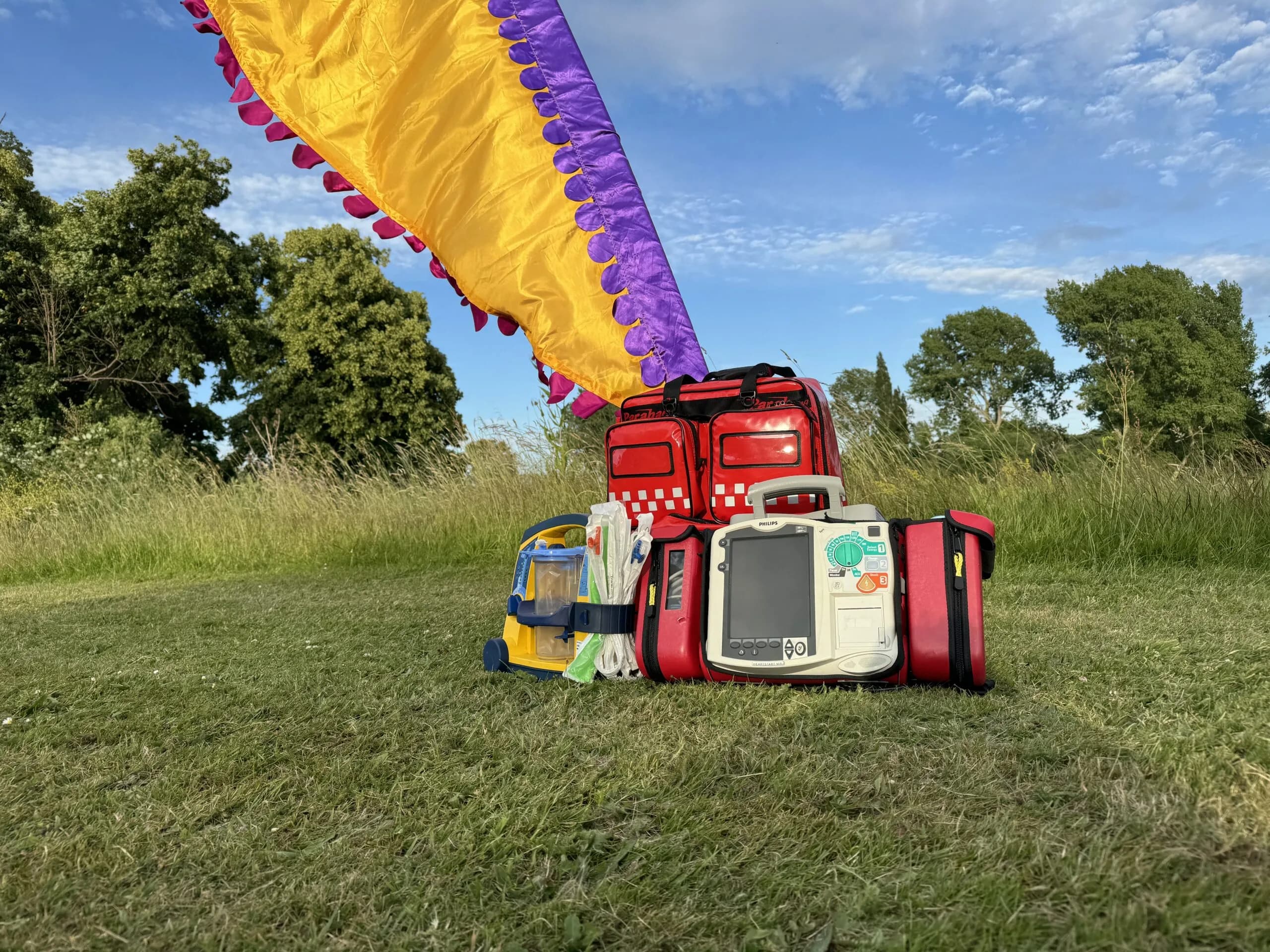
Clinical records are part of the care we provide.
Patient encounters are documented through the medical-record arrangements established for the service, giving clinicians access to the information they need while maintaining the confidentiality of the individual.
Records should show what happened, what was found, what treatment was provided, what advice was given and what happened next.
For longer-term services, this becomes particularly useful when a worker returns to the medical team for follow-up rather than starting again with a completely new consultation every time.
Access to clinical information is controlled according to role and clinical need. Project management reporting is handled separately.
A project team has a legitimate need to understand how its medical service is performing.
It does not need access to confidential consultation records to do that.
Management reporting may include
The clinical record exists for the patient and the healthcare team. The management report exists to help the project run the service.
A monthly report showing that the medical room saw 47 people tells you how busy it was.
It does not tell you whether the care was good.
Clinical audit looks at the care itself — including review of clinical records, treatment decisions, referral pathways, documentation standards, medicines use and compliance with agreed clinical procedures.
Audit findings can identify
Actions are followed through rather than disappearing into an audit spreadsheet.
Healthcare is delivered by people, often in difficult circumstances. Incidents, concerns and near misses need a proper route for review.
Clinical incidents can be reported into the governance process, assessed according to their significance and investigated where required.
The purpose is not simply to establish what happened. It is to understand whether something needs to change.
Where an incident also forms part of the client's own project investigation, the clinical and operational processes can work alongside each other while maintaining appropriate patient confidentiality.
A site medical service should have a clear route for workers to raise a concern about the care they receive.
Complaints and clinical feedback are reviewed through the governance process, with clinical input where the concern relates to treatment or professional practice.
Themes can also be considered collectively. One complaint may concern an individual interaction. Several similar complaints may tell us something about the service. Both matter.
Mobilisation
We do not wait until the first patient walks through the door to decide how the service will operate.
For a long-term industrial project, mobilisation can include development or confirmation of:
What the medical team is there to provide and the boundaries of the service.
Which clinical roles are required and the competencies attached to them.
Who provides oversight and how clinical matters are escalated.
What is required, where it is located and how it is maintained.
What medicines are needed and how they will be governed.
How patient records, forms and supporting documents will be managed.
How the clinical team works with site control, security, first responders and external emergency services.
What will be measured, reviewed and reported once the service is operational.
That gives the project a defined medical service from day one rather than a collection of arrangements that gradually emerge after mobilisation.
Throughout the contract
The service does not stand still once mobilisation is complete. Workforce numbers change. The project moves into different phases. Staff rotate. Clinical activity identifies new demand. Higher-risk work begins and ends. Policies and professional guidance change.
The governance process gives us a structured way to review those changes and decide whether anything in the medical provision needs to move with them.
Clinical governance belongs to the healthcare service, but it should not be invisible to the client.
For a managed industrial medical contract, we can agree how governance interfaces with the project's own H&S, quality and management arrangements.
That may include attendance at review meetings, agreed performance reporting, actions arising from exercises or incidents, assurance information and planned service reviews.
The project gets visibility of how the service is performing without taking over clinical decision-making or compromising patient confidentiality.
Across the division
The value becomes greater when governance sits across the whole medical provision rather than individual components being managed in isolation.
A project may combine:

Where those services are brought together, governance gives them a common clinical structure.
The worker gets a clearer pathway through the service. The clinical team has defined routes for escalation and referral. And the project has one view of how its healthcare provision is performing.
Questions project teams ask
The clinical leadership structure is established as part of the service design and mobilisation process. For larger project deployments, this includes defined responsibility for clinical oversight, governance and escalation.
Checks are proportionate to the role and can include professional registration, qualifications, relevant experience, employment checks, mandatory training and project-specific competencies.
Where medicines are included in the service, the governance arrangements cover the medicines required, authority for their use, ordering, storage, stock control, expiry, replenishment and incident management.
Patient clinical records remain confidential healthcare records. The project can instead receive agreed management information, service-performance data and appropriate information required following an incident.
Yes. Audit can form part of longer-term clinical services and may review areas such as patient documentation, clinical practice, medicines, equipment and compliance with agreed procedures.
The incident is reported into the governance process and reviewed according to its significance. Where investigation or action is required, this is recorded and followed through, with learning fed back into the service.
Yes. Governance interfaces can be agreed during mobilisation so the healthcare service can support relevant client assurance, performance and review arrangements without compromising clinical independence or confidentiality.
Industrial Medical Services
Integrated healthcare for construction, energy, utilities, infrastructure and remote projects.
ViewIndustrial ambulance standby and HCPC-registered paramedic cover for high-risk works.
ViewOn-site construction medics aligned to CDM, HSE first aid duties and your Construction Phase Plan.
ViewMedical Emergency Response Planning (MERP) — risk profiling, access/egress, drills and escalation pathways.
ViewProject enquiry
If you are procuring medical provision for a construction, infrastructure, energy or remote project, send us the specification.
We can talk through the clinical structure behind the proposed service — including staffing, records, medicines, equipment, escalation, audit and reporting — as part of the solution.