
Principal contractors
Embedded or visiting construction medics aligned to your Construction Phase Plan, site rules, induction process, emergency arrangements and reporting requirements.
Industrial Medical Services
Construction medics and site medical provision for UK projects — aligned to CDM 2015, HSE first aid duties and your Construction Phase Plan.
Construction sites need more than a first aid box in the site office. LightMed provides qualified construction medics matched to your risk profile, workforce and programme — part of our Industrial & Infrastructure Healthcare division.
Site medical provision
Sites need a reliable plan for falls from height, crush injuries, chest pain in a welfare cabin, grinder injuries, heat-related collapse, and workers who arrive struggling physically or mentally — not just a box tick.
LightMed supplies qualified construction medics — from first responders through to construction paramedics — to support your existing health and safety arrangements, shorten response times and give your management team clear clinical reporting.
From short-term high-risk works to long-term embedded cover, we build site medical provision around your project, workforce and risk profile.
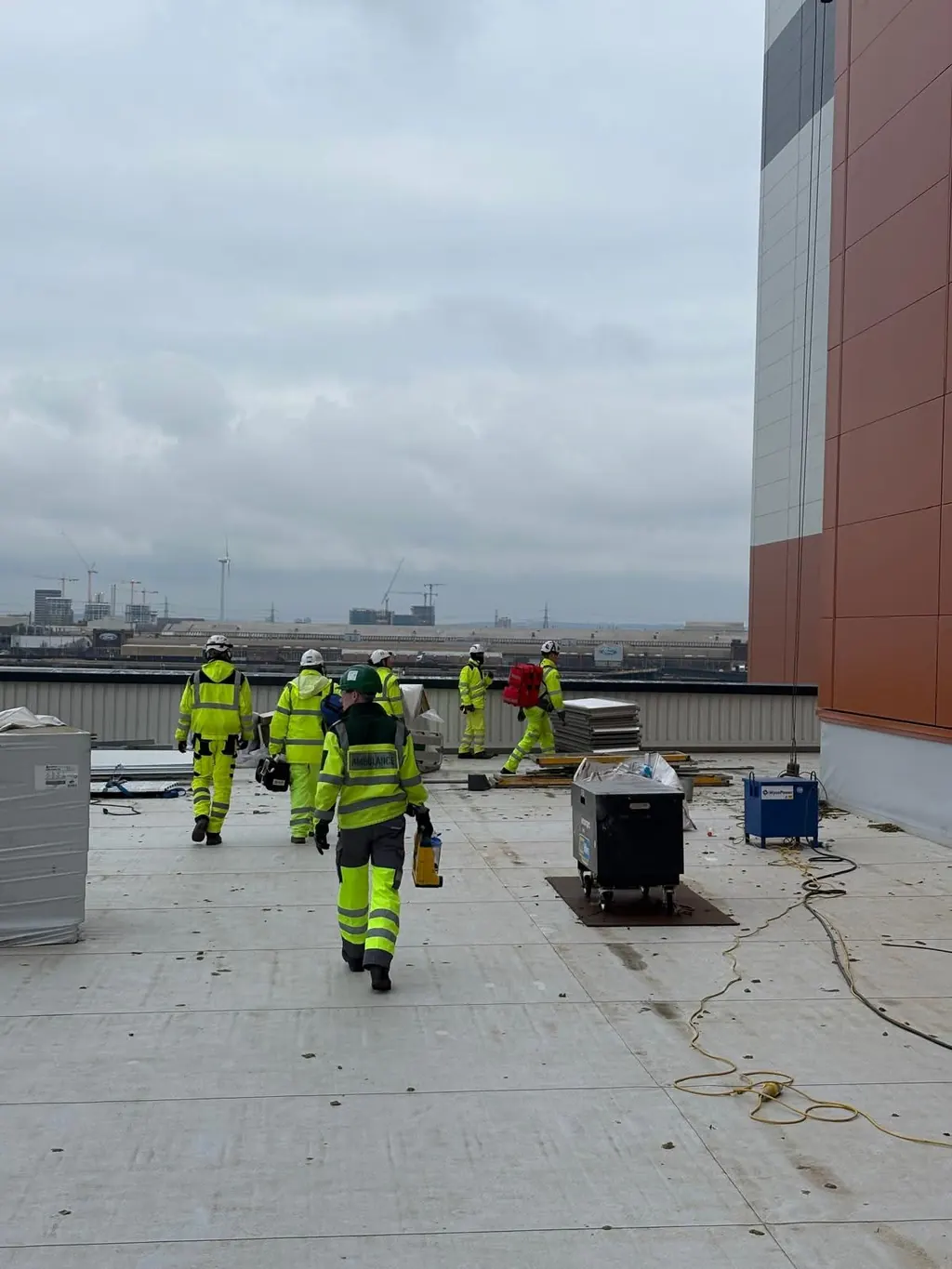
Day-to-day value
A good construction medic is there when something serious happens — but their real value is daily visibility, early intervention and practical support for the people keeping the site moving.
Sector risk
Construction remains one of the highest-risk sectors in Great Britain. The latest HSE figures for 2024/25 show 124 workers killed in work-related accidents across Great Britain, with 35 of those in construction. HSE also reports around 680,000 self-reported non-fatal workplace injuries, 59,219 employee injuries reported under RIDDOR, and 40.1 million working days lost due to work-related ill health and workplace injury.
Behind those numbers sit lost time, investigation workload, disrupted programmes, subcontractor downtime, reputational risk, and workers who need better support before small problems become major ones. Falls from height, moving plant, manual handling, slips and trips, power tools, confined spaces, heat stress, dust exposure and lone working are part of daily site reality. LightMed helps you strengthen the medical side of your site safety arrangements.
Legal and compliance context
Site medical provision should sit alongside your wider health and safety arrangements, not outside them. The Health and Safety (First-Aid) Regulations 1981 require adequate and appropriate first aid equipment, facilities and personnel so employees can receive immediate attention if injured or taken ill at work. HSE guidance for construction expects suitable first aid equipment, an appointed person or first aider, and clear information for workers.
Under CDM 2015, principal contractors plan, manage, monitor and coordinate health and safety during the construction phase, including cooperation between contractors and suitable site arrangements. Under RIDDOR, certain injuries, dangerous occurrences and work-related diseases must be reported and recorded; HSE guidance sets out reportable categories.
LightMed supports compliance by providing competent construction medics, clear documentation, incident records, trend reporting and practical advice that fits your site procedures.
Who we support
Embedded or visiting construction medics aligned to your Construction Phase Plan, site rules, induction process, emergency arrangements and reporting requirements.
Reliable clinical support, incident documentation and practical assistance with drills, rescue planning and first aid arrangements.
Visible first aid and urgent care support on site, reducing uncertainty when a worker is injured or becomes unwell.
Advice on appropriate first aid training, site medical escalation and practical education for their workforce.
What we provide on construction sites
Qualified first responders, EMTs or construction paramedics on site during the working day. The clinical grade is matched to your risk profile — a small fit-out differs from a demolition scheme.
We can help set up, operate or review your site first aid room or medical post. Where you already have arrangements, we work with them rather than duplicate them.
Medical provision should connect with the rest of site safety. We work with your H&S team on drills and can review subcontractor first aid training, with gaps closed through our Qualsafe first aid courses where appropriate.
Construction site medical cover is the flagship of our industrial division. Related requirements — remote access, ambulance standby, occupational health, clinics and wellbeing — have their own pages so each search intent stays clear.
Where ambulance access is delayed by geography, security or layout, see our remote site medical services.
Remote site medicalNeed a dedicated site ambulance or paramedic standby model beyond embedded construction medics?
Ambulance & paramedic coverFormal construction health surveillance and industrial occupational health are coordinated through our managed OH pathway.
Occupational healthWeekly clinics, drug and alcohol testing support and workforce wellbeing programmes sit under the wider industrial division.
Industrial Medical ServicesStaffing options
Suitable for lower-risk sites or as part of wider first aid provision. First aid, basic life support, AED use, wound care and structured escalation.
A step up for higher-risk construction environments. Enhanced assessment, trauma care, airway support and oxygen administration where trained and authorised.
Suitable where a broader pre-hospital skill set is required, particularly on larger or higher-risk construction sites.
Appropriate for high-risk construction, demolition, major shutdowns, night works or projects needing advanced pre-hospital decision-making.
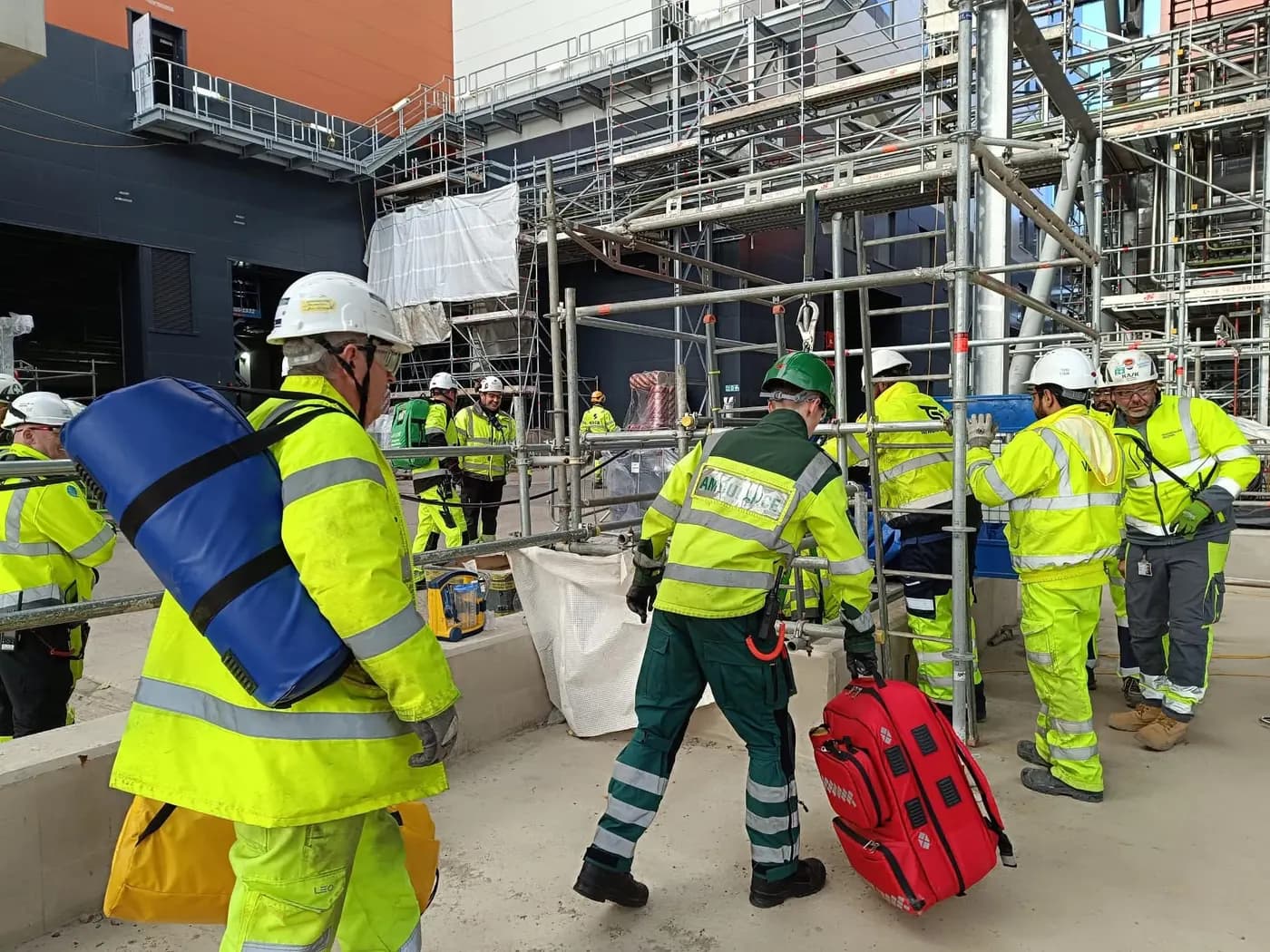
Equipment and clinical capability scaled to your site — not a generic “medic in a van” package.
Reporting
Proportionate reporting for H&S review. Patient-identifiable information is handled confidentially; management reporting is usually anonymised and focused on trends, safety learning and operational improvement.
How we work with your site team
We review your project, workforce numbers, working hours, access routes, site layout, high-risk activities, current first aid provision and emergency arrangements.
We recommend the most proportionate construction medical model — first responder, EMT, paramedic, or blended site medical provision.
We agree rota, reporting lines, site induction, medical post location, equipment, documentation and emergency escalation.
Our construction medic works alongside your site team, attends incidents, supports workers, documents contacts and contributes to drills where required.
You receive agreed reporting at weekly or monthly intervals, with trends and practical recommendations to support site safety.
Example deployment models
Illustrative only — your final model follows site review and risk assessment, not a table on a website.
| Site type | Typical model | Best suited for |
|---|---|---|
| Small fit-out or refurbishment | First responder visits / fixed cover | Basic first aid support, audits, worker reassurance |
| Medium construction site | Enhanced first responder / EMT on selected days | Higher-risk work packages, welfare checks, first aid room support |
| Large construction project | Full-time first responder, EMT or paramedic | Daily site presence, emergency care, reporting |
| Demolition or high-risk works | Paramedic-led cover | Falls, crush risk, machinery, hot works, complex rescue |
Why LightMed
LightMed combines pre-hospital care, first aid training and practical site governance. We understand muddy access routes, changing layouts, subcontractors on rotation, tight programmes, early starts, night works, plant movements and workers who do not want to make a fuss.
Our role is to support your H&S team with competent construction medical cover that is visible, approachable, documented and proportionate — within our wider industrial medical services division.
Explore Industrial & Infrastructure Healthcare
Industrial Medical Services
Integrated healthcare for construction, energy, utilities, infrastructure and remote projects.
ViewOn-site clinicians, ambulance crews and medical support for remote construction, energy, utilities and infrastructure projects.
ViewIndustrial ambulance standby and HCPC-registered paramedic cover for high-risk works.
ViewOccupational health, health surveillance, safety-critical medicals and fitness-for-work support for construction and industrial projects.
ViewGet a proportionate recommendation
Whether you need cover for a high-risk lift, a construction paramedic during demolition, or a full-time site medic, tell us about your job and we will respond with a clear, proportionate recommendation.
Include in your message
Frequently asked questions
Yes. The Health and Safety (First-Aid) Regulations 1981 require employers to provide adequate and appropriate first aid equipment, facilities and personnel so employees can receive immediate attention if injured or taken ill at work. HSE construction guidance also expects suitable first aid equipment, an appointed person or first aider, and clear information for workers on who to contact and where to find help.
Yes. We provide HCPC-registered construction paramedics where the site risk profile warrants that grade — for example demolition, high-risk lifts, confined space environments, major shutdowns or large projects. For dedicated industrial ambulance and paramedic standby models, see our ambulance and paramedic cover page.
Not exactly. Construction medics provide immediate care, welfare conversations and practical reporting. Formal health surveillance and SEQOHS-accredited occupational health services are coordinated through our industrial occupational health offering with specialist partners where required.
We can provide clinical documentation, incident summaries and factual information to support your internal investigation and reporting process. The duty to submit a RIDDOR report remains with the responsible employer, self-employed person or person in control of the premises, depending on the circumstances.
Yes. LightMed delivers regulated first aid training, including Emergency First Aid at Work and First Aid at Work. We can also advise subcontractors and site teams where training gaps are identified.
LightMed supplies construction medics across the North West and wider UK. Contact us with your programme and risk profile — we will come back with a clear recommendation.